
Brick and Mortar Repair
Deteriorated joints can be repointed by removing unsound mortar and installing compatible replacement mortar. Loose, cracked, or spalled bricks may require individual replacement or a larger rebuild when damage is widespread.
Serving Milwaukee, Wisconsin & surrounding areas
Mon–Fri 8am–6pm Sat 9am–2pm
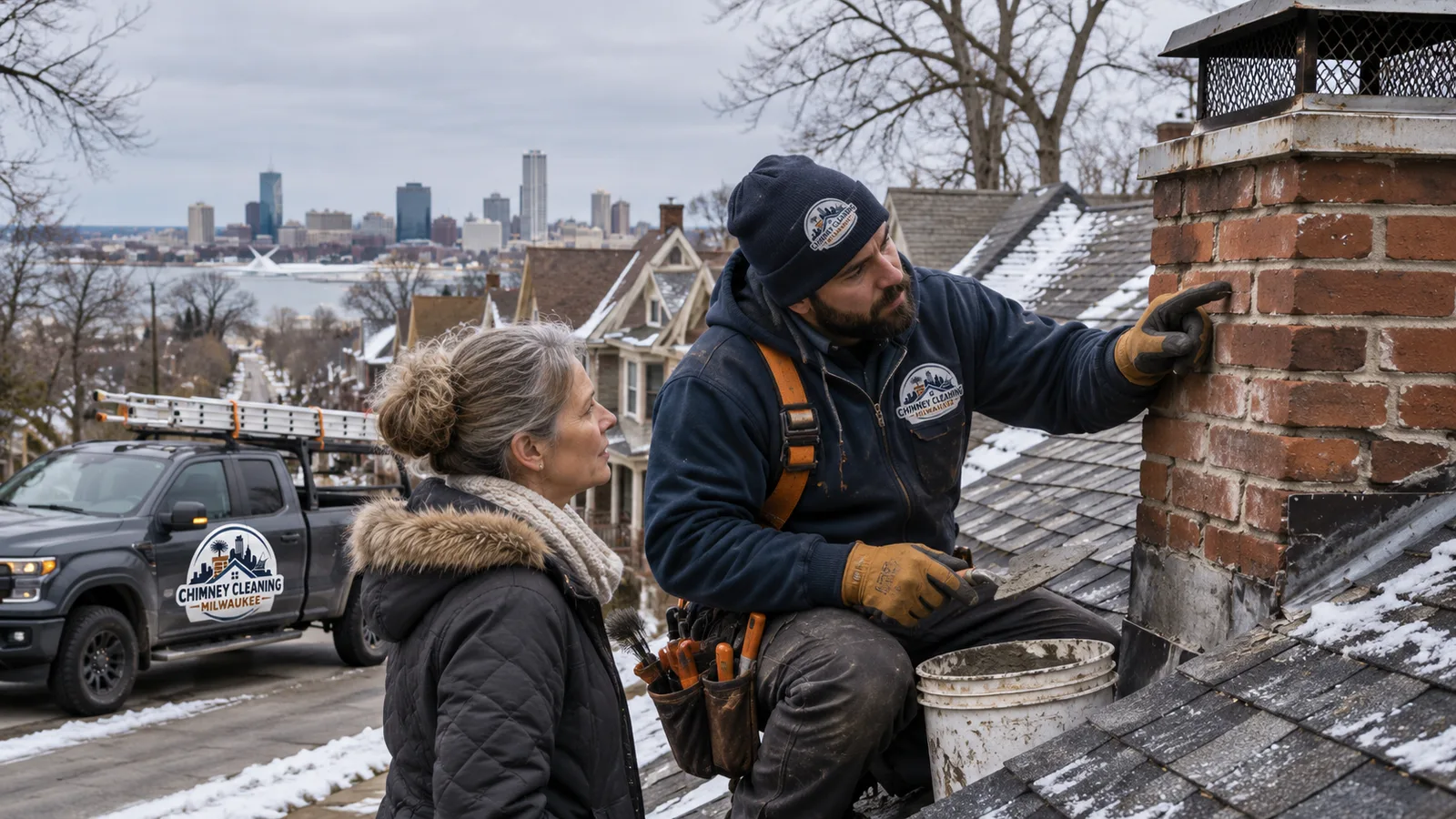
Repair damaged masonry, stop water entry, and restore a safer, more dependable fireplace with a scope based on the condition of your chimney.
Milwaukee chimney repair should address why the chimney is failing, not cover the visible symptom with a quick patch. Chimney Cleaning Milwaukee evaluates the masonry, mortar joints, crown, flashing, flue area, and fireplace connection before recommending work. That distinction matters when a stain near the fireplace may come from failed flashing, an open mortar joint, a cracked crown, or damaged chimney components.
As a chimney company Milwaukee homeowners rely on, we explain what needs attention now, what can be monitored, and which repairs protect the structure from further water and freeze-thaw damage. The written scope should identify the affected area, proposed materials, access needs, and any limits that cannot be confirmed until loose or damaged material is removed.
Milwaukee winters repeatedly expose exterior masonry to moisture and freezing temperatures. Water that enters small cracks can freeze, expand, and worsen deterioration. Timely repairs help keep localized damage from spreading into larger sections of brickwork or the fireplace system.
Deteriorated joints can be repointed by removing unsound mortar and installing compatible replacement mortar. Loose, cracked, or spalled bricks may require individual replacement or a larger rebuild when damage is widespread.
A sound crown sheds water away from the flue and masonry. Cracks, poor slope, and separated edges can admit moisture into the chimney, so the repair must fit the crown's condition rather than simply coat over loose material.
Step flashing and counterflashing seal the chimney where it passes through the roof. Rust, open seams, failed sealant, or improper installation can cause leaks that resemble a masonry problem.
Cracked firebrick, deteriorated refractory mortar, and damaged areas around the smoke chamber need materials rated for high heat. The extent of repair depends on access and whether damage reaches concealed components.
Cracked clay tiles, open flue joints, or liner deterioration require a condition-based recommendation. Depending on the chimney and appliance, options may include localized repair or an appropriate relining system.
When bricks have lost their faces, courses are unstable, or mortar has failed extensively, rebuilding the affected portion may be more durable than repeated patching.
Fireplace repair in Milwaukee often starts inside the firebox, where high temperatures expose weak joints and damaged firebrick. Refractory mortar is made for these heated areas; ordinary masonry mortar is not a suitable substitute. A repair may involve replacing individual firebricks, renewing joints, correcting a damaged lintel area, or addressing deterioration where the firebox transitions toward the smoke chamber.
A complete evaluation also considers how the fireplace and chimney work together. Smoke staining, loose masonry, visible gaps, persistent odors, or debris in the firebox can point to different defects. Cosmetic work should wait until active leaks and structural concerns have been identified.
Older housing found in established areas such as Bay View, Riverwest, and Washington Heights can include masonry chimneys built in different periods and configurations. Repair details must match the existing brick, mortar hardness, flue construction, and fireplace use. Lime-rich historic mortar, for example, should not automatically be replaced with a harder mix that may shift stress into softer brick.
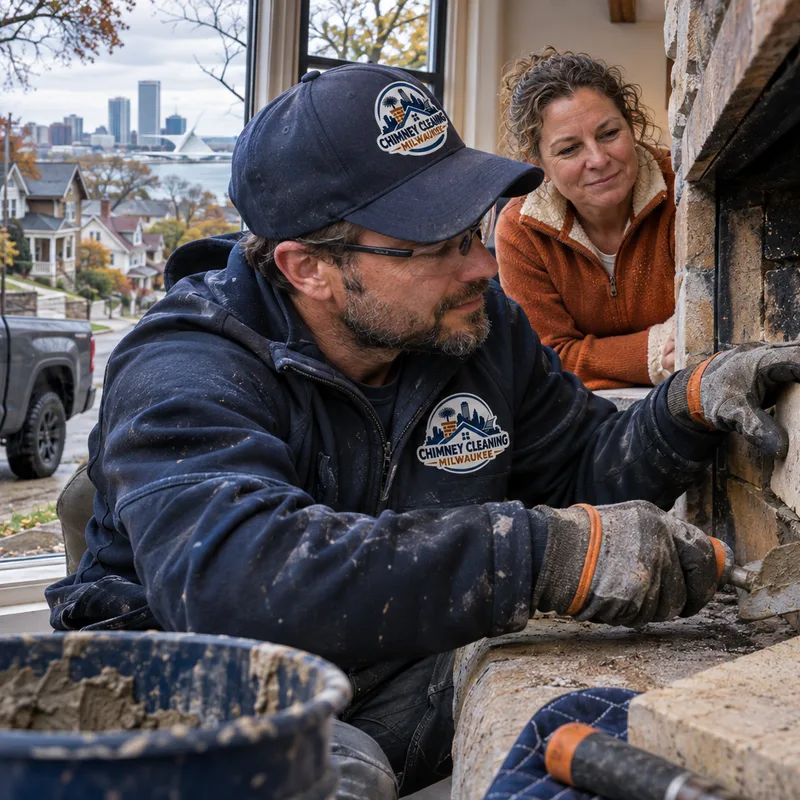
The first review covers accessible brick, mortar, crown, flashing, firebox, damper area, and visible flue conditions. Interior staining and the location of reported leaks help narrow the source.
Loose masonry, active water entry, damaged firebox material, and suspected flue defects receive priority. Minor weathering may be documented for monitoring rather than added automatically to the repair scope.
The scope identifies whether the work calls for repointing, brick replacement, crown repair, flashing correction, refractory repair, relining, or reconstruction. Material compatibility and safe roof access are considered before work starts.
Damaged material is removed to a sound base, repairs are installed, and the work area is reviewed after completion. Masonry needs suitable temperatures and protection while mortar or concrete cures.
Milwaukee chimney repairs typically cost about $500 to $2,500 for localized masonry, crown, or flashing work, while substantial rebuilding or relining can run roughly $3,000 to $8,000 or more. These are general planning ranges, not a quote.
Final cost changes with chimney height, roof pitch, access, masonry condition, material matching, flue configuration, and the amount of removal required. A small visible crack may conceal broader deterioration, while some leaks need only a focused flashing repair. The exact cost is confirmed after an on-site inspection defines the repair scope.
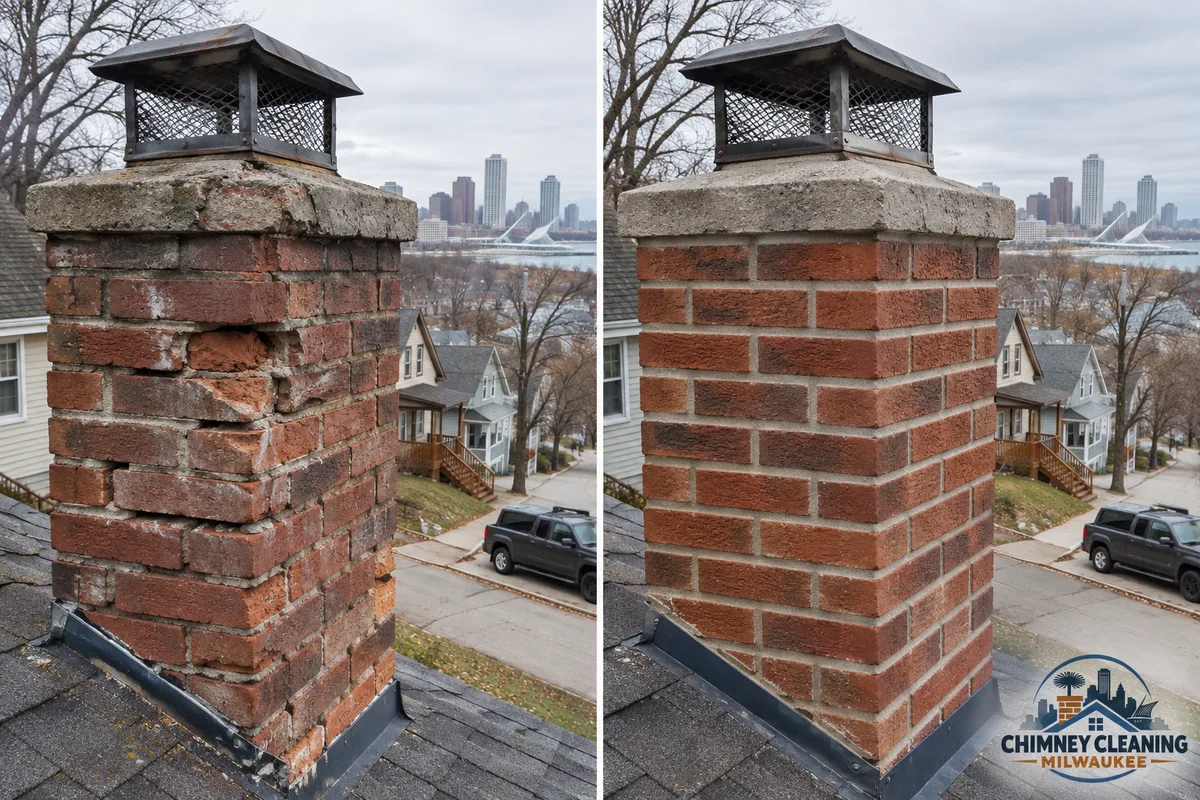
Moisture is a frequent driver of masonry damage. Rain and melting snow can enter through crown cracks, open joints, missing caps, or the roof-to-chimney connection. Milwaukee's freeze-thaw cycles can then enlarge saturated cracks and cause brick faces to flake or break away, a condition called spalling.
Efflorescence, the white crystalline deposit sometimes seen on brick, shows that moisture has moved through masonry and carried salts to the surface. It does not identify the entry point by itself. Rusted metal components, peeling paint near a fireplace, damp odors, and recurring ceiling stains also warrant investigation.
Tuckpointing is useful only when the bricks remain serviceable and failing joints are properly cut out before new mortar is placed. Smearing mortar across the joint face tends to create a thin repair with poor bond. Likewise, applying a coating without correcting the water source can trap moisture or allow hidden deterioration to continue.
A useful estimate distinguishes repairable areas from masonry that has deteriorated too far for surface work. Repointing is appropriate when mortar joints have failed but the surrounding brick remains sound. Brick replacement is needed when units are cracked, loose, or spalled through the face. A partial rebuild becomes practical when deterioration affects multiple courses or the upper chimney has lost stability.
Material selection matters. Replacement brick should be reasonably compatible in size, absorption, strength, and appearance. Mortar must suit the original masonry rather than being selected solely for maximum hardness. At the crown, the finished surface should direct water away from flue openings and masonry edges. At the roof, flashing should manage water mechanically instead of depending on exposed sealant as the primary defense.
Scheduling also affects masonry work. Mortar and concrete products have temperature and curing requirements, so cold snaps, precipitation, and high winds can change the work plan. Chimney Cleaning Milwaukee sets the method around actual conditions rather than rushing weather-sensitive repairs.
Visible cracks, loose brick, fireplace staining, and recurring leaks are easier to assess before another season of water and freezing weather adds damage. Arrange an inspection to get a written scope based on the chimney's current condition.
Call for a Free QuoteYes, many chimney leaks can be repaired without a rebuild when the masonry remains stable. The correct fix may involve flashing, counterflashing, crown cracks, mortar joints, or a missing or damaged cap. Milwaukee snowmelt and freeze-thaw exposure make it especially important to locate the entry point instead of coating every exterior surface.
Localized repairs often take one working day, while extensive repointing, a partial rebuild, or liner work may require several days. Roof access, cure times, material availability, and Milwaukee weather can affect the schedule. The proposed scope should state both the expected work time and any period when the fireplace should remain unused.
Tuckpointing is enough only when deterioration is concentrated in the mortar joints and the bricks are still sound. Spalled, cracked, or loose bricks need replacement, and widespread damage may call for rebuilding affected courses. Compatible mortar is important in older Milwaukee masonry because an overly hard mix can damage softer brick.
Do not use the fireplace when there are visible firebox cracks, loose components, smoke entering the room, suspected flue damage, or instructions to stop use. A damaged liner or open joint can expose nearby materials to heat and combustion products. An inspection can determine whether the defect affects safe operation.
Masonry fireplace repair is best scheduled when temperatures and moisture conditions meet the selected product's installation requirements. Spring through fall often offers more workable conditions, but the exact timing depends on the repair and weather forecast. Interior refractory work may have different constraints than an exterior crown or rebuild.
An inspection can often identify likely chimney-related entry points, but stains may also involve roofing, condensation, or concealed paths that require further testing. The chimney's crown, flashing, counterflashing, joints, and attic-side evidence should be considered together. Water can travel before it becomes visible inside a Milwaukee home.
A fireplace repair estimate should identify the damaged area, removal required, repair method, proposed materials, access provisions, and limits of the scope. It should also distinguish firebox refractory work from chimney masonry, flashing, or liner work. That detail makes competing Milwaukee fireplace repair estimates easier to compare.
Tell Chimney Cleaning Milwaukee what you have noticed, including leaks, cracks, loose brick, smoke issues, or fireplace wear. An on-site assessment can identify the likely cause and define the right repair before work begins.